10 Beste Teleskope
Von führenden Marken und Bestsellern, die im Internet erhältlich sind.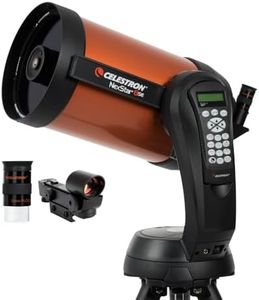
Ähnliche Produkte
Bis zu 31 % Rabatt


Unsere Top-Auswahl
Gewinner
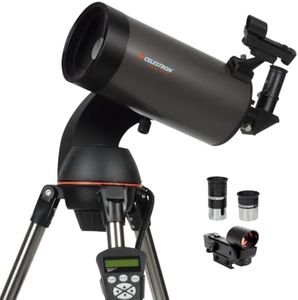
Celestron 11069 NexStar 8SE computergesteuertes Schmidt-Cassegrain-Teleskop mit vollautomatisierter Halterung, SkyAlign-Technologie und XLT-Beschichtung, Schwarz/orange

Das Celestron NexStar 8SE ist ein computergesteuertes Schmidt-Cassegrain-Teleskop mit einem 8-Zoll (203 mm) großen Hauptspiegel, der viel Licht sammelt und somit klare und helle Bilder von Planeten, Mond und tieferen Himmelsobjekten ermöglicht. Die automatische GoTo-Montierung mit einer umfangreichen Datenbank von 40.000 Himmelskörpern macht es besonders für Einsteiger und Amateurastronomen einfach, gewünschte Objekte schnell zu finden und zu verfolgen. Die Einarm-Gabelmontierung ist stabil und das Teleskop lässt sich dank der SkyAlign-Technologie in wenigen Minuten ausrichten. Zudem ist das Set relativ kompakt und mit etwa 10,9 kg zwar nicht ultraleicht, aber noch gut transportabel, wenn man es sorgfältig verpackt. Die mitgelieferte Software Starry Night unterstützt bei der Orientierung am Nachthimmel.
Der manuelle Fokus ist einfach zu bedienen, allerdings erfordert er etwas Übung, um perfekte Schärfe zu erzielen. Eine mögliche Einschränkung ist das Gewicht und die Größe, die für den Transport oder spontane Einsätze etwas hinderlich sein können. Die Vergrößerung ist variabel durch die Okulare, jedoch sollte man realistisch bleiben – extrem hohe Vergrößerungen sind bei diesem Teleskop nicht immer optimal, da die Bildqualität und Stabilität abnehmen können.
Das NexStar 8SE stellt eine sehr gute Wahl für Hobbyastronomen dar, die Wert auf automatisches Finden von Sternen legen und ein leistungsfähiges Teleskop für Planeten- und Deep-Sky-Beobachtungen suchen, aber bereit sind, das etwas größere Gewicht und die manuelle Fokussierung in Kauf zu nehmen.
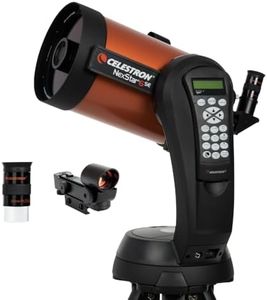
Celestron 11068 NexStar 6SE Computerised Schmidt-Cassegrain Telescope with Advanced GPS, Astroimaging and AutoAlign Features, Black/Orange
Das Celestron NexStar 6SE ist ein Schmidt-Cassegrain-Teleskop mit einer 150 mm (6 Zoll) großen Öffnung, die genug Licht sammelt, um Planeten, Mond und viele Deep-Sky-Objekte gut sichtbar zu machen. Die kombinierte Brennweite von 1500 mm sorgt für eine ordentliche Vergrößerung, die mit dem mitgelieferten 25-mm-Okular etwa 60-fach beträgt – gut geeignet für Einsteiger und Hobbyastronomen. Die computergesteuerte GoTo-Montierung mit einer Datenbank von 40.000 Himmelskörpern erleichtert das Auffinden von Objekten enorm und hält sie während der Beobachtung automatisch im Blick. Das macht es besonders für unerfahrene Nutzer einfach, schnell Ergebnisse zu sehen, ohne lange manuell suchen zu müssen.
Die Altazimut-Einarm-Gabelmontierung ist relativ stabil und ermöglicht eine einfache Aufstellung und Bedienung, ideal für den schnellen Einsatz zu Hause oder unterwegs. Mit rund 21 Pfund (ca. 9,5 kg) ist das Teleskop zwar nicht das leichteste, aber dennoch transportabel, insbesondere da es sich in kompakte Einzelteile zerlegen lässt. Die manuelle Fokussierung ist klassisch und zuverlässig, jedoch erfordert sie etwas Übung für scharfe Bilder. Die mitgelieferte kostenlose Starry Night Software hilft zusätzlich dabei, den Himmel besser zu verstehen und die Beobachtungen zu planen.
Ein kleiner Nachteil ist, dass der Strom aus Batterien gespeist wird, was bei längeren Beobachtungen oder Außenaufenthalten schnell nachladbar oder austauschbar sein sollte. Das NexStar 6SE eignet sich gut für Einsteiger und Freizeitbeobachter, die Wert auf eine moderne, computergesteuerte Erfahrung legen, ohne gleich zu komplizierter Technik greifen zu müssen.
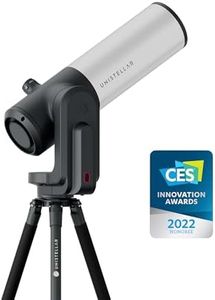
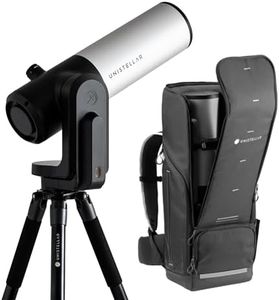
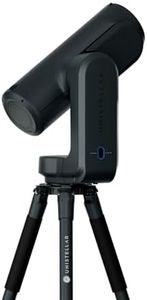
Unistellar Odyssey Pro
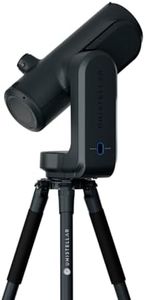 Unistellar
The Unistellar Odyssey Pro is a smart, compact telescope with an 85mm aperture, making it suitable for casual stargazers who want good views of planets like Jupiter and Saturn, as well as some deep-sky objects like the Orion Nebula. Its main strength lies in its user-friendly design—it connects to your smartphone or tablet via an app that helps you automatically find and track celestial objects, even in light-polluted city skies. This automatic setup and live image processing mean you don’t need to manually align or search for stars, which is great if you’re new to astronomy or prefer a hassle-free experience.
The telescope uses an Altazimuth mount, which is simple to move but might not be as precise for long exposure astrophotography. Weighing 6.5 kg and measuring about half a meter in each dimension, it strikes a good balance between portability and stability, but it’s not pocket-sized. The manual focus may require some adjustment, although the app’s autofocus features help. One limitation is its aperture size; while 85mm is decent for beginners, it won’t gather as much light as larger telescopes, so very faint objects won’t be as visible.
The magnification is moderate, and there is no zoom function, so for detailed planetary viewing, it may feel a bit limiting. The telescope runs on a rechargeable battery, adding to convenience but also meaning you need to keep it charged. Designed for enthusiasts who value smart technology and ease of use, the Odyssey Pro is well suited for users wanting an intuitive experience without deep technical knowledge, but those looking for advanced manual control or very high power might want to explore other options.
Top-Auswahl vergleichen
Celestron 11069 NexStar 8SE computergesteuertes Schmidt-Cassegrain-Teleskop mit vollautomatisierter Halterung, SkyAlign-Technologie und XLT-Beschichtung, Schwarz/orange Auf Amazon ansehen | Celestron 11068 NexStar 6SE Computerised Schmidt-Cassegrain Telescope with Advanced GPS, Astroimaging and AutoAlign Features, Black/Orange Auf Amazon ansehen | |
|---|---|---|
| Angebot | ||
16%billiger | 23%billiger | - |
| Ausgewählt von | ||
| 1.441 | 1.339 | 1.237 |
| Mehrere Stile verfügbar | ||
| Aperture Size | ||
| 203 mm | 150 mm | 85mm |
| Magnification | ||
| variabel durch Okulare | 60-fach | moderate |
| Type of Telescope | ||
| Schmidt-Cassegrain-Teleskop | Schmidt-Cassegrain | -- |
| Mount Type | ||
| Einarm-Gabelmontierung mit GoTo Tracking | Altazimut-Einarm-Gabelmontierung | Altazimuth |
| Portability | ||
| ca. 10,9 kg, relativ kompakt | 21 Pfund, ca. 9,5 kg, zerlegbar | 6.5 kg, 52x52x59 cm |
| Ease of Use | ||
| manueller Fokus, einfache Bedienung | -- | auto setup, app tracking |